
Breaking Bread, Building Community: How Food Powers Learning at St. Margaret’s
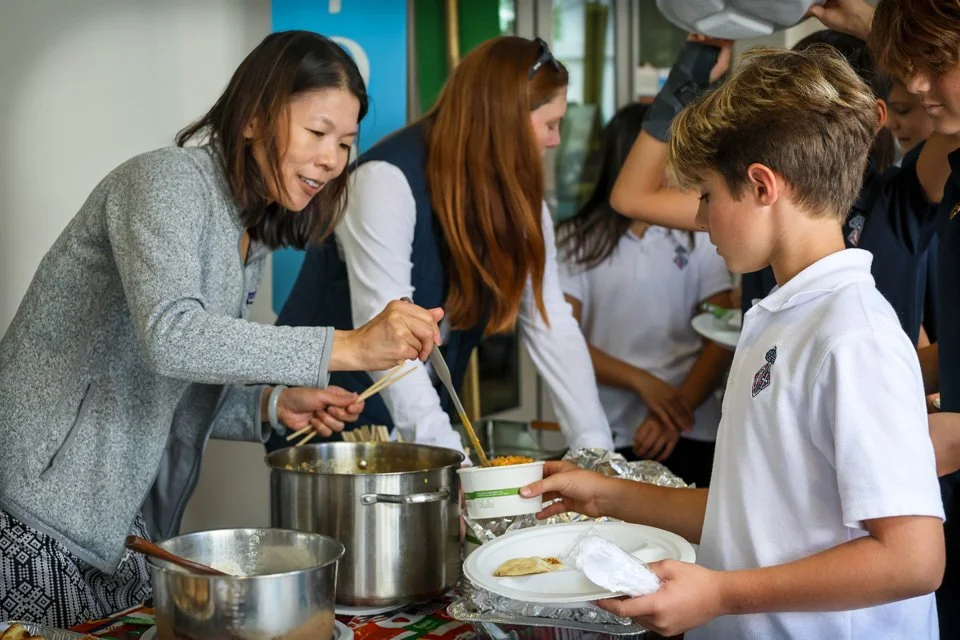
The Middle School grade 6 heritage feast brings the Tartan community together in celebration of food and cultures around the world.
By Marites Olano
Food is more than sustenance at St. Margaret’s – it is a language, a connector, and a catalyst for community. From the youngest Early School gardeners to Upper School visual artists, students encounter learning and connection through shared meals, hands-on experiences and sustainable practices.
As the school prepares for the completion of the St. Margaret’s Commons this summer, the collective experience of a shared meal and its benefit to the Tartan community comes further into focus. Spaces like the Great Hall and outdoor courtyard encourage connection and togetherness over food, and the on-site chefs will have an extensive menu of nutritious options that serve to promote healthy eating. In addition, planned programming will embrace the Commons as not just a place to eat, but a place to learn.
Of course, food has been a catalyst for learning at St. Margaret’s for a long time. In all divisions, food has been central to educational touchpoints, community-building moments and a deeper connection to the environment and the land.
Here are a few examples of food as an engine for learning–and what’s next for students and the school community at St. Margaret’s:
The Early School: Learning Through Food and Nature
The Early School Garden is a revitalized space where students measure soil, track seedlings, and care for chickens in a “chicken condo.” The garden, paired with a new greenhouse and accessible pathways, immerses children in hands-on exploration.
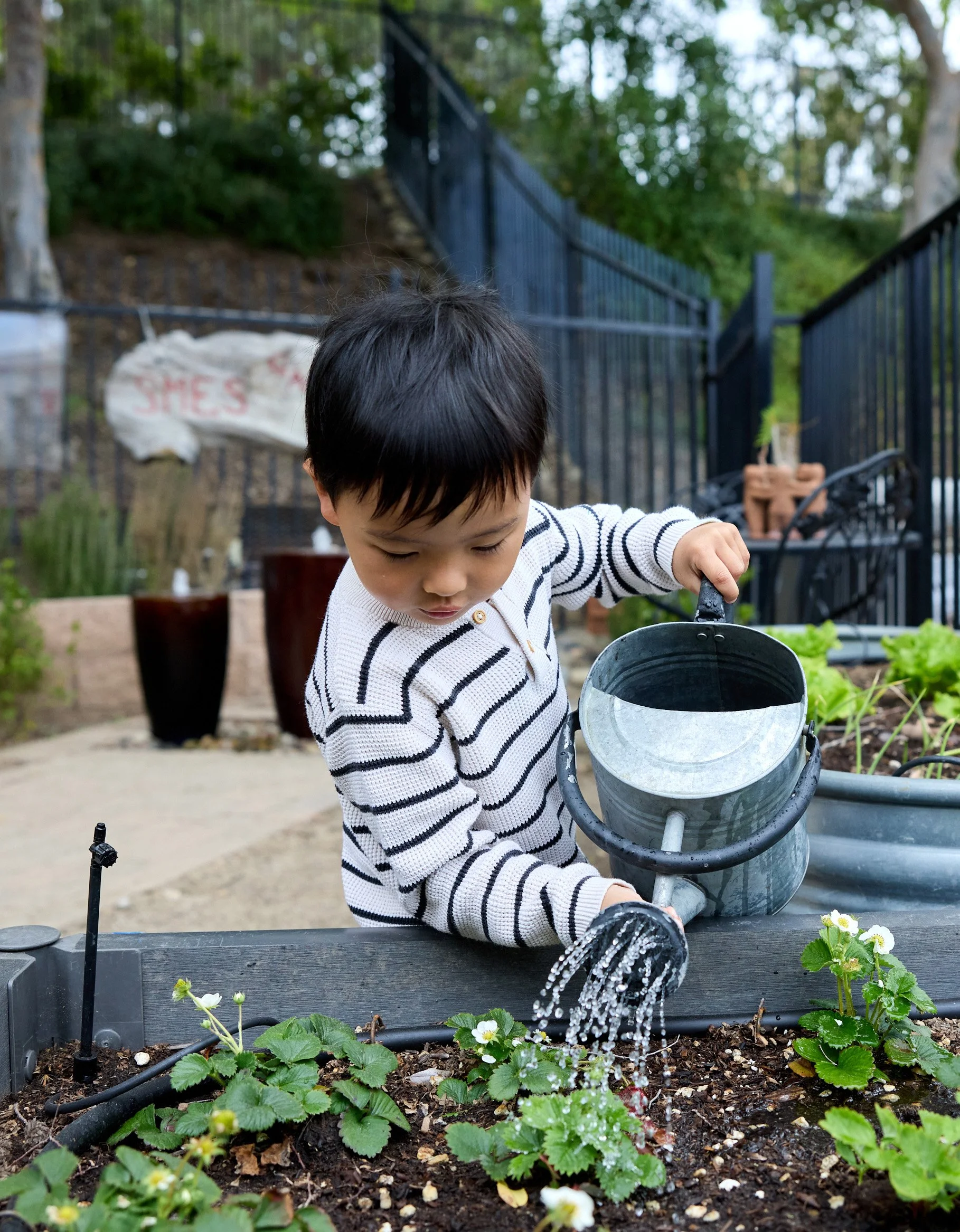
An Early School student waters strawberry plants in the Garden.
“The collaborative nature of gardening builds a culture of care and belonging, as children take turns watering, harvesting, and feeding the hens,” said Erika Garcia, Early School outdoor and motor development teacher. The garden’s harvest often finds its way into the Demonstration Lab, a purpose-built kitchen where young learners explore math, science, history, and culture through food preparation.
One memorable lesson brought Upper School students from English class to the Early School’s Demonstration Lab, where they baked fortune cookies with Taoist and Confucian sayings, translating complex ideas into Early School-friendly wisdom. The cookies offered Early Schoolers more than a treat as they became a bridge for cross-divisional learning and a playful introduction to philosophical thinking.
As students enter Middle School, food becomes more than nourishment—it becomes a lens for exploring identity, history, and belonging. That idea comes to life each year during the Heritage Feast, an interdisciplinary unit led by Middle School world history teacher Rian Otto and English teacher Owen Beitner. Through research, interviews and reflective writing, students investigate their family histories and cultural traditions, anchoring their learning in a meaningful family recipe. The project culminates in a festive campus gathering made possible by the deep involvement of parent volunteers and loved ones, who prepare and share dishes that reflect their heritage with the entire grade 6 community.
Held in the Middle School every year since 2017, the community feast featured food, dessert, and drink items from across the globe. Cultures represented included Australia, South Korea, Philippines, Germany, Greece, Hawaii, Iran, Guatemala, India, China, United Kingdom, France, Japan, Italy and Mexico. From birria and chicken curry with Thai basil to lumpia, udon noodles, empanadas, musubi, and potstickers, the feast offered a vivid celebration of cultural diversity. “My hope is that students see themselves in one another,” Mr. Beitner said. “Empathy, community, and literally breaking bread with classmates are invaluable lessons.”
The shared recipes from the event are published each year in a Heritage Cookbook, a keepsake that has become a cherished grade 6 tradition that honors family stories, strengthens community ties, and cultivates cultural pride.
Everyday Connections and Wellness
At St. Margaret’s, the power and influence of food is also incorporated in students’ experiences daily. The Scottie Snack Cart, originally a Lower School program supported by a PTF grant, now serves all divisions. From plums to apricots, snap peas and cucumbers, students enjoy a rotating selection of fresh produce from local farms, including The Ecology Center, while exploring the principles of healthy eating and the plentiful healthy food options available to them.
Lower School Principal Jennifer Blount remarked the benefits of developing students' palettes during the Lower School experience, “It is our hope that students will take this experience home and request fruits and vegetables in their daily meals.” The distribution of fruits and vegetables is done each month by grade 5 parent volunteers.
Connecting to the Wider World
St. Margaret’s commitment to food, learning, and community extends beyond campus through partnerships like the La Novia Farm, a space under development adjacent to St. Margaret’s which was created in collaboration with the City of San Juan Capistrano and The Ecology Center.
La Novia will be a hub of learning through food and the land, led by a dedicated garden and plant science educator who will lead the care and instructional use of La Novia Farm, promoting sustainable agriculture, environmental stewardship, and hands-on learning across all school divisions.
St. Margaret’s has partnered with The Ecology Center for many years. In the past, grade 1 students harvested strawberries and transformed them into jam for Grandparents and Special Friends Day while learning about responsible consumption and production. Mrs. Blount emphasizes, “Through this trip, our grade 1 Tartans were able to serve the St. Margaret’s community while learning more about responsible local farming.”
Even Upper School students benefit from this approach. AP 3D Design students spent a day at The Ecology Center exploring site-specific art and mindfulness, while sharing a community lunch made with farm-grown ingredients. Jesse Standlea, visual arts teacher reflects, “Being in a new environment encourages fresh insights and deeper conversations,” demonstrating that food, place, and collaboration nurture creativity as well as community.
A Unified Vision
From planting seeds to sharing a meal, St. Margaret’s students experience a continuum of learning where food is central. St. Margaret’s Commons will unify these experiences, providing a physical space for shared meals, conversations, and collaboration across all divisions.
Here, students will witness firsthand that growth of plants, ideas, and relationships flourishes in an environment rooted in curiosity, care, and community. The Commons will serve as more than a dining hall providing a hub for social connection across all grade levels extending to the professional community as well as St. Margaret’s families. By bringing students together over shared meals, it encourages conversation, collaboration, and the exploration of new flavors that expand their palates. In doing so, the space fosters a sense of togetherness and community that resonates far beyond the table.
As St. Margaret’s continues to expand its educational and communal footprint, one truth remains clear: we all have more in common than we think, and food remains the ingredient that connects us together.
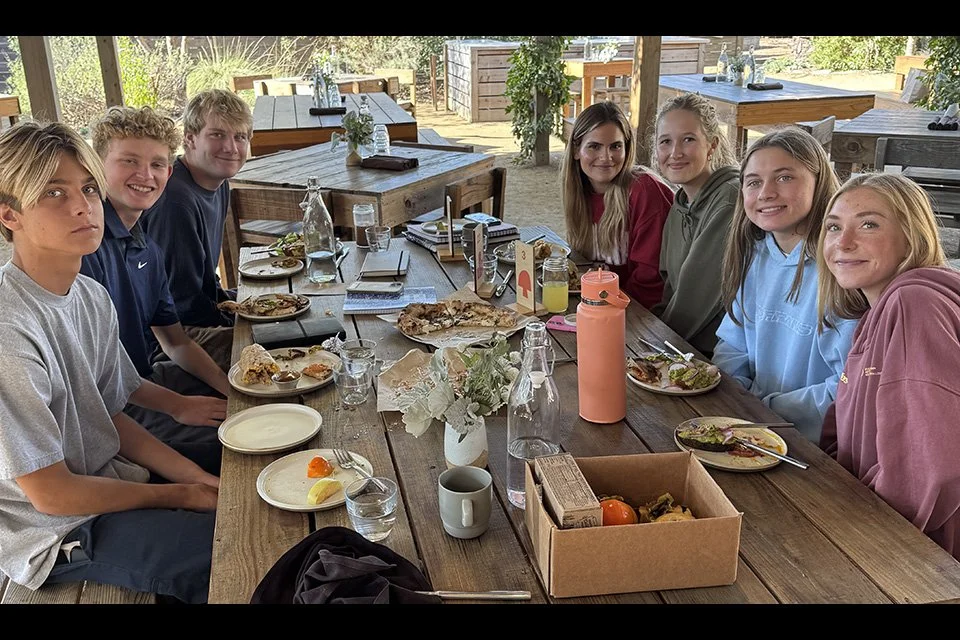
AP 3D Design students at The Ecology Center to explore art and mindfulness and enjoy a lunch.